
Welcome!
Below are a few lessons we have learned throughout our succession planning journey. They are meant to help as a guide, a starting point, but we highly recommend hiring a professional to help you on your journey. We have engaged with several over the years, each bringing a unique perspective helping us with the cultural, functional, and financial planning involved in supporting the next generation of our studio.
Take a look! If you want to chat more about our journey, we are happy to share.
vision
The most critical question our founding partners asked themselves before starting on this journey - is ‘why’. Why are we pursuing succession? Before you proceed with anything else it is critical that you understand this reasoning and if you have multiple partners, that you are on the same page with your answer to this question. Many sole-proprietor companies choose to close their doors at the end of their career - and that is absolutely ok. For us, it was important that the studio live on beyond the founding partnership. ARCHITEKTON was specifically established without the names of our founding partnership because it was never about them as individuals but rather a larger idea of our commitment to the built environment and the communities we serve. We believe that the investment in these communities extends beyond any single individual and thus, the studio lives beyond them as well. So what is your ‘why’?
Why are you pursuing succession?
What is the goal; continuity, growth, merger, etc.?
What does success look like at the end of the transition?
What role will the current partners have after transition?
TIMING
The next major question is what is the desired timeline? We have experimented with this ourselves over the course of several generations of ownership and our recommendation is that you can never start too early. We feel our sweet spot is a 10-year plan and the following layout is based on that process. This has worked well for our size studio and has been most effective in balancing the financial impact and cultural impact of this process. Below is an example of how we structured this buy-sell process:
Key components of the chart to the right:
Phasing the founding partner buy-out
This helps with financial stability and reduces/eliminates the need for promissory note
This structure mostly* supported a large financial hit to the studio all at once.
LESSON LEARNED: Extending the buy-in period
The orange phase shown for emerging leaders is intended to on-ramp potential partners. This is a 5-year period that offers ‘skin-in-the-game’ but without the heavy risk of buying out a new partner if the fit isn’t quite right. Think of it as dating before the proposal. This was a major lesson learned over the course of this process.
Partner-status begins at 100 shares and equal partnership is shown here at 500 shares. This slower process supported more stability within the studio and fewer dramatic changes culturally.
Set a mandatory sell-back age and clearly identify what that looks like - is it all at once or is it phased? What are the terms of that agreement. This should all be covered in your buy-sell agreement.
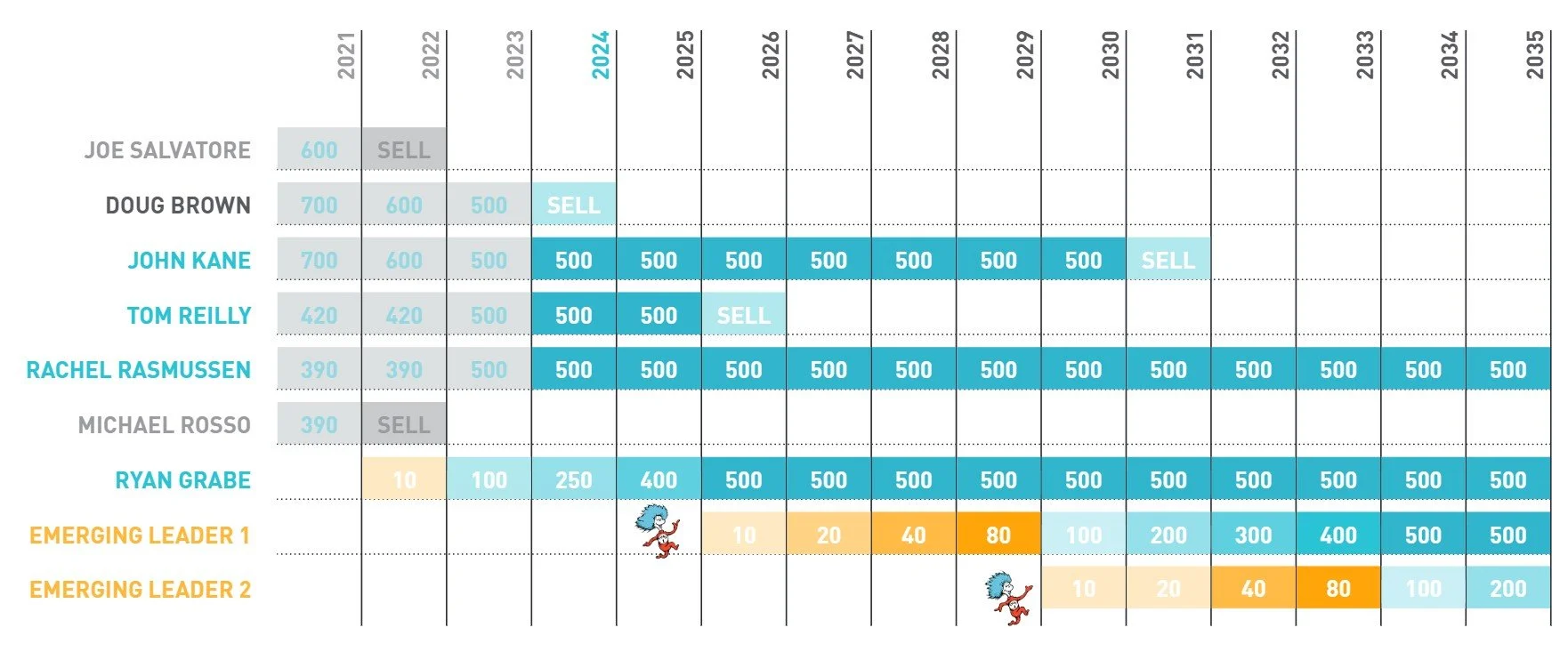
Numbers shown as examples only and not intended as actual share counts.
OWNERSHIP & EQUITY
Are the founders/partners ready for an exit?
Relinquishing control is one of the hardest parts of this process but also the most critical. Without the commitment to transitioning the leadership, this will fail.
Commit to the transition both internally and externally
Who is taking over client relationships, business development, and design leadership? How is this being communicated?
LESSION LEARNED: make the transition intentional and obvious. One of the challenges we faced throughout this process was assuming our clients understood that there was a passing of the torch. Ensuring that they will continue to be cared for in the same manner and with the same values is key to the success of the next generation of ownership. Don’t assume people know this is happening.
Consider the legal and financial structure of the firm.
Transition of licenses, contracts, insurance, tax documents, etc - who are the signatories? Consider these items as part of the transition not just the client contact.
Buy-sell agreements, life insurance for key personnel, tax implications.
TALENT & CULTURE
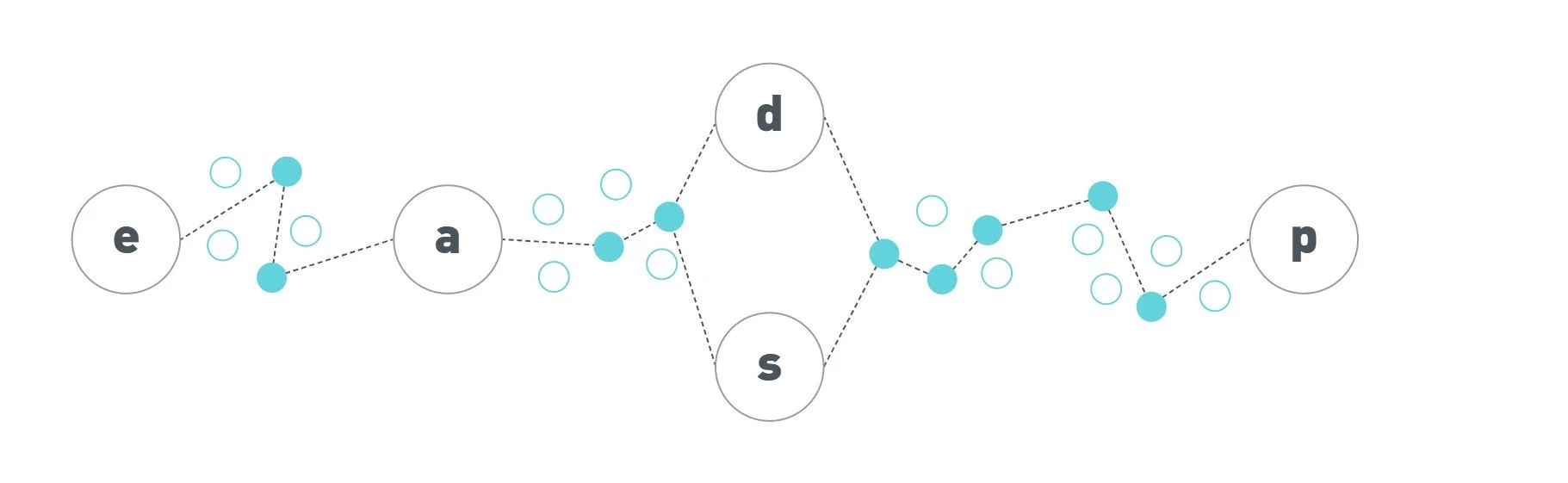
Leadership Development Plan: Choose your own adventure!
How do you identify the next generation? This is a tricky one. Just like choosing a spouse, they have to be the right fit. What we do is so hard and having a mis-aligned partnership will ultimately infect the studio and affect the projects and the work. Our studio has a leadership development process in which we look at individuals within the studio who we believe possess leadership skills and potential. Each tier of this development process from staff to associate, director, principal and partner comes with a myriad of responsibilities that are critical to the work of a partner at ARCHITEKTON. This mentorship process helps us identify who might make a good partner down the road. It is not a checklist but rather a guide and process of establishing if people have what it takes to take ARCHITEKTON into the next generation. From there - its a lot of conversations.
TALK IT OUT!
It is critical to trust your gut during this process but just as important to communicate with your partners about who you want to add to the mix. You have to have the hard and truthful conversations.
RESPECT and TRUST
If even one of the current partners does not support or feel comfortable with the potential emerging leader identified, that needs to be respected and worked through. Bringing someone into a current partnership that is not in tune with the entirety of the group will infect everything you have built and will be expensive to repair in the end.
TRANSPARENCY
For us, transparency within the studio of what our process is has been key. We potentially over-share within the studio so they understand the role they play in this process and the opportunities available to them if they are so inclined. This commitment to transparency has been a game-changer within the studio and valuable beyond the succession planning process. This has improved our retention and cultural growth and has very much been an example of “rising tides raise all ships,” The more people seem to understand, the more ownership they take in their work and the more resilient the studio becomes, which ultimately, supports the next generation of leaders whoever they might be.